Five Grapes, One Island
The native Sicilian wines that taste like the place they come from
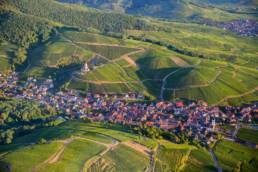
There is a moment when, if you drink enough Sicilian wine, you stop tasting grapes and start tasting a place. Sicily is not really an Italian island so much as a Mediterranean crossroads that happens to fly an Italian flag. The Greeks planted vines here almost three thousand years ago. The Arabs brought citrus, almonds, and the sweet and sour cooking that still defines the Sicilian table. Nine hundred miles of coastline wrap around a live volcano. Nowhere else tastes quite like it, and the island’s own grapes, the ones it grew long before anyone thought to plant Chardonnay here, carry that whole story in each glass.
I opened five Sicilian native grapes recently, three whites and two reds, all grown on the island. What struck me was not that they were good, though they were. It was that they sorted themselves, almost without my help, into two clear halves. The whites tasted of the sea. The reds tasted of the hills. Sample them in that order and Sicily more or less draws you a map of itself.
So let’s follow the map, and it begins at the water.
The Whites: The Sea
The first white was a Feudo Disisa Grillo, from the hills of Monreale just inland from Palermo, and it is the best place to begin because Grillo itself is a comeback story. For most of the last century this grape existed to be turned into Marsala, the fortified wine your grandmother might have cooked with. No one bottled it on its own and asked you to take a second look. Then Sicily decided its native grapes were worth taking seriously, and Grillo turned out to have been a fine dry white all along, hiding in plain sight.
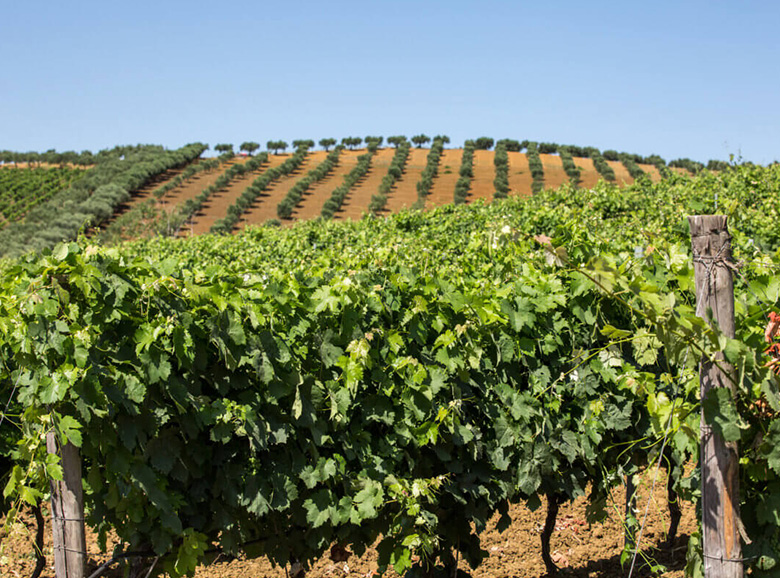
You can taste why the island bothered. There is peach and pineapple up front, a little lemon verbena, and then the palate does the thing that makes coastal whites worth drinking: a briny, mouthwatering acidity, grapefruit and salted melon, and a clean finish where the salt lingers after the fruit has gone. It drinks like something that grew within sight of the water, which it more or less did. Sicilians pour Grillo with seafood and almost nothing else, and they are right to. Save your steak for later. This wants raw oysters, grilled fish, or even a plate of fritto misto. Or, if you want to eat the way western Sicily actually eats, try the couscous, a dish the island took from North Africa centuries ago and has cooked as its own ever since. On my own table it would go straight to a low-country shrimp boil without missing a step.
The Di Lorenzo family has farmed this estate since the 1860s, though the family itself supposedly arrived in Sicily from Britain in the 1100s, in the retinue of a Norman king. That is the kind of history that sounds invented and mostly is not. Sicily has been conquered so many times that a British-Norman family making Greek-descended grapes near the town that gave us the Godfather is simply a Tuesday.
The second white was the most serious of the three, and it came from the volcano. The Tenuta del Vallone Rosso, or TDVR, is grown high on the southwestern slope of Mount Etna, and one thing worth clearing up right away: the word “Rosso” is the name of the estate, not the color of the wine. This is a white, made mostly from Carricante, Etna’s great white grape, with a splash of Catarratto and Minnella along for the ride.
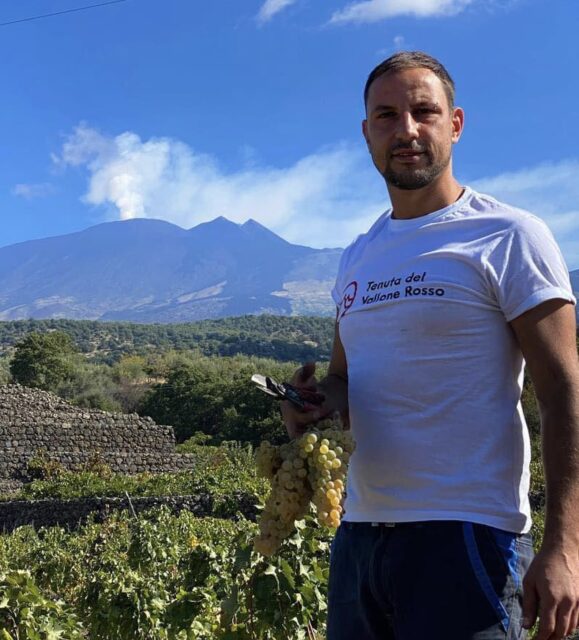
Vines on an active volcano sound like a gimmick until you taste what the mountain does to them. The nose gives you golden apple, grilled lemon, pineapple, and citrus blossom, but underneath there is a woody, herbal note and something flinty, almost smoky, that you do not find in whites grown on gentler ground. The palate is broad and genuinely textured, viscous in a way that coats the mouth, with apple and lime, a pleasant note of bitter almond, and a long mineral finish that tastes, honestly, a little like the volcano smells. This is the white you bring to the table when you want people to stop talking and pay attention. It can handle richer seafood, a swordfish steak, anything you would give a serious white Burgundy, and it will age longer than you expect.
The third white, a Bagliesi Catarratto from organic vineyards down in Agrigento, is the round, friendly, everyday one, and I mean that as high praise. Catarratto is the most planted white grape on the island, the workhorse, the wine Sicilians actually drink on that Tuesday. This one just smells unctuous on the nose, all orchard fruit and a surprising note of banana, with citrus blossom behind it. The palate is viscous and mouth-coating, the acidity broad and tangy, and as it opens the banana and orchard give way to something brighter and more like tangerine, with a whisper of almond on the finish.
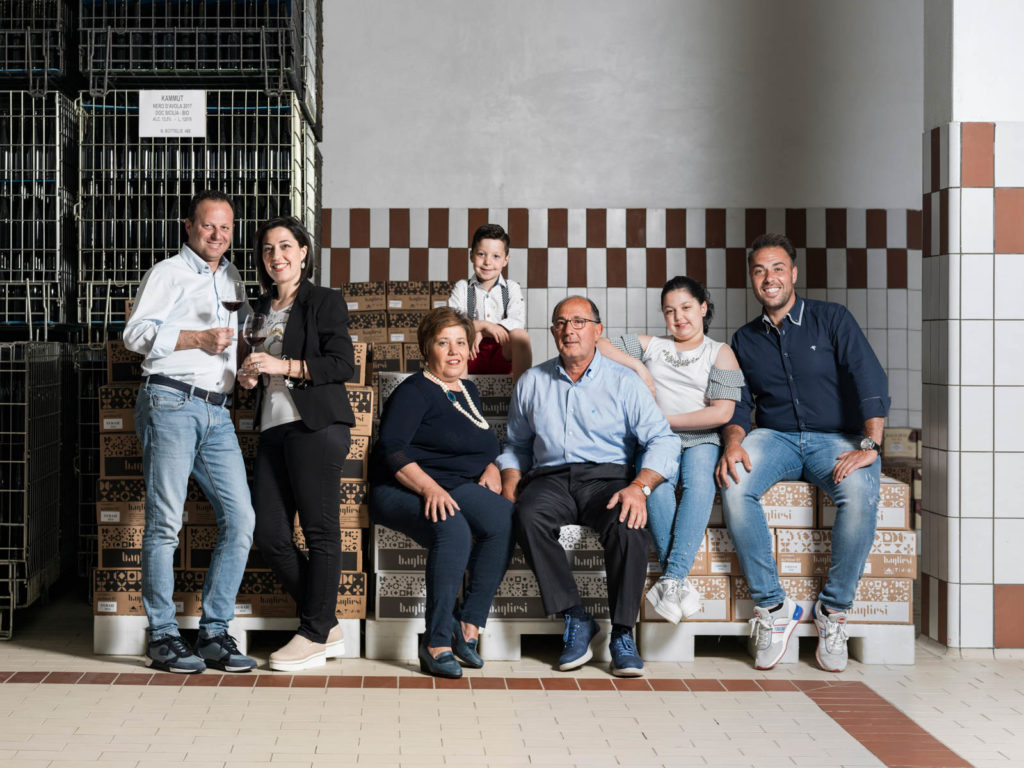
If the Etna white is the one you serve to impress, this is the one you actually open most nights. It is built for the fried chickpea fritters called panelle, for fresh cheeses, for vegetables cooked the sweet and sour Sicilian way. It asks nothing of you and gives back more than its price suggests. Vito Bagliesi and his family are the third generation to farm these twenty-five hectares, and they farm them organically, which in Sicily is less a marketing choice than an acknowledgment that the sun and wind do most of the work anyway.
Three whites, then, and three faces of the same coast: Grillo the saline aperitif, Carricante the mineral and serious one off the volcano, Catarratto the round everyday pour. If someone told me they did not know Sicilian wine and wanted one bottle to start, I would hand them the Grillo, because that briny snap is the most Sicilian thing in the whole lineup. But I would not argue if they reached for another. That is rather the point.
The Reds: The Hills
Now walk uphill, away from the water, into the scrub and the herbs. The reds smell different because they grow different, and the first of them is a grape that almost nobody in America knows and everybody should. Planeta Frappato, from the Dorilli estate down in Vittoria, is proof that a red wine does not have to be big to be serious.
Frappato is light, bright, low in tannin, and best served with a chill on it, which makes some people assume it is not a real red wine. Those people are wrong, and one glass of this fixes them. The nose is smoky red fruit, strawberry with baking spice, a sweet herbal note, and a lift of violet. The palate is light-bodied and tart in the best way, pomegranate and strawberry and raspberry that taste, as I wrote in my notes, like red fruit soaked in an herbal marinade. The tannins are there but ripe and integrated, with a faintly sandy texture that is reminiscent of the red sands of Vittoria, where you can stand in the vineyard and see the beaches the Allies landed on in 1943. Sicilians drink it with everything from spaghetti alle vongole to grilled vegetables, and it is the great chillable red of the island. If you think you do not like red wine, this is where you start. Put it in the fridge for twenty minutes and drink it on the porch.
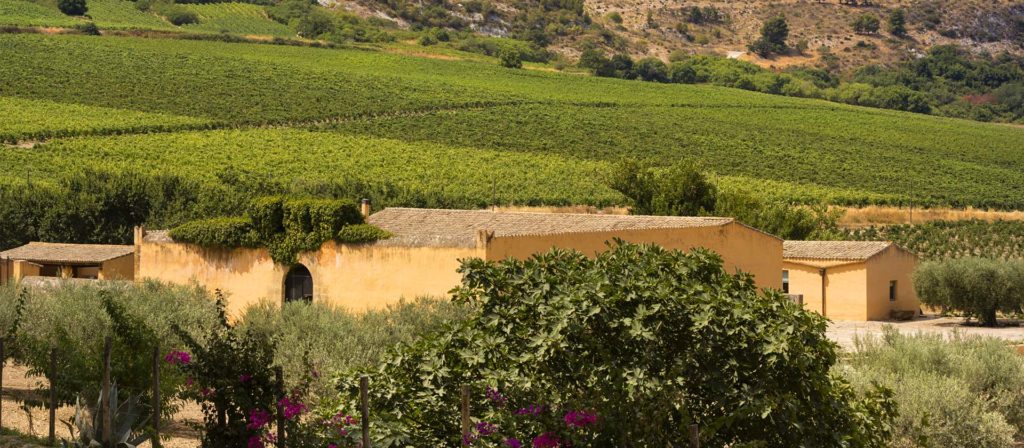
Planeta is the name that dragged modern Sicilian wine onto the world stage. The family has farmed this island for seventeen generations, but the winery as we know it began in the 1990s, when Diego Planeta and his nephew Alessio, who trained under the legendary Giacomo Tachis of Sassicaia fame, set out to prove Sicily could make wine worth arguing about. They now farm six estates strung across the island on the simple principle that every territory should have its own winery and its own grape. That they make this humble, joyful, chillable Frappato with the same care as their flagship bottles tells you something about what they actually believe.
The last wine was the one you pour when the evening cools and the light goes long. Alessandro di Camporeale Donnatà Nero d’Avola, from the high hills near Monreale, is Sicily’s signature dark red, and it drinks like the island’s hillside at dusk. The nose is plum and blackberry wrapped in that dry Mediterranean garrigue, the wild scrub of rosemary, thyme, and sunbaked herbs, with a note of cigar box and cedar behind it.
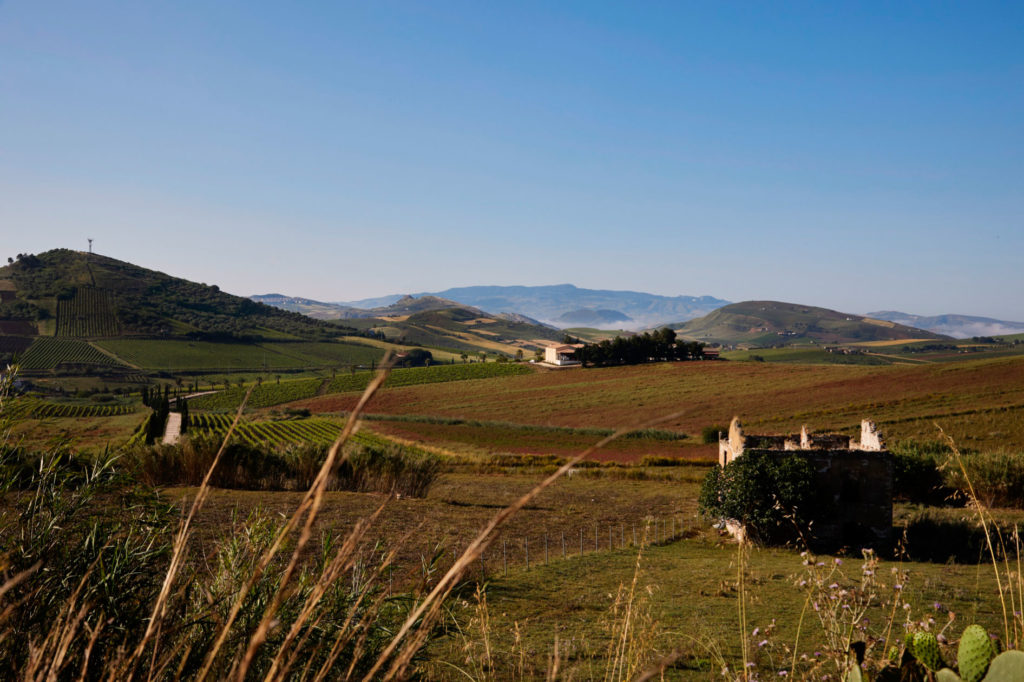
The palate carries the same dark fruit and scrub-brush herbs, with a bright, almost crunchy acidity and tannins that are present but ripe and fine-grained, only lightly drying. There is a gentle warmth on the finish, the kind that makes a wine feel generous rather than heavy. That warmth is exactly why this is the evening red, the one for anelletti al forno, for a slow ragu, for grilled meat off the fire and the last hour of a long dinner. The Alessandro cousins, Anna, Benedetto, and Benedetto, are the fourth generation on this land, in a place whose name comes from the Latin for a field worthy of kings. Drink it and you understand the name.
The Whole Island in Five Glasses
Line the five up in order and you have taken a small tour: the saline coast in the whites, the herbal hills in the reds. Running under all of it are the Greek and Arab and Norman histories that make Sicily taste like nowhere else. Not one of these grapes is trying to be French. Not one of them apologizes for where it comes from. They taste like the island, and the island tastes like itself.
Which brings me to the only instruction that matters. I have told you what I tasted and what the Sicilians pour these wines with, but your mouth is not my mouth, and it is certainly not a Sicilian’s. Maybe the volcano white leaves you cold and the everyday Catarratto is the one you fall for. Maybe you chill the Nero d’Avola too, rules be damned. Good. That is the whole reward of drinking a place instead of a label. Buy a couple of these, cook something you love, and let your own palate tell you which glass tastes most like Sicily to you. There is no wrong answer, and that is exactly the point.