Post and Courier – August 2026 – Two Coasts, One Table: Italian Whites for Lowcountry Seafood
Stand on a dock at the edge of the Lowcountry on a summer evening and you already understand something about the Italian coast, whether you have been there or not. The rhythm is the same. A boat comes in. Somebody sorts the morning’s catch. And by that night it is on a table, cooked simply, next to a cold bottle of white wine that grew up within sight of the same kind of water. We tend to think of Italian wine as something distant and complicated, but the coastal whites are among the most familiar things in the world to us. They were made by people who eat the way we eat.
Italy has more than four thousand miles of coastline, and for centuries the people living along it have answered the same question we ask every summer. What do I pour with shrimp, with oysters, with the fish that was swimming this morning? Their answer was never complicated, and never the mindless, insipid, mass-produced swill so many settle for. It was a whole family of bright, saline, sun-warmed whites built for salt and shell. This month I want to introduce you to three of them, none of which will cost you more than twenty dollars, and all of which belong on your table this summer.
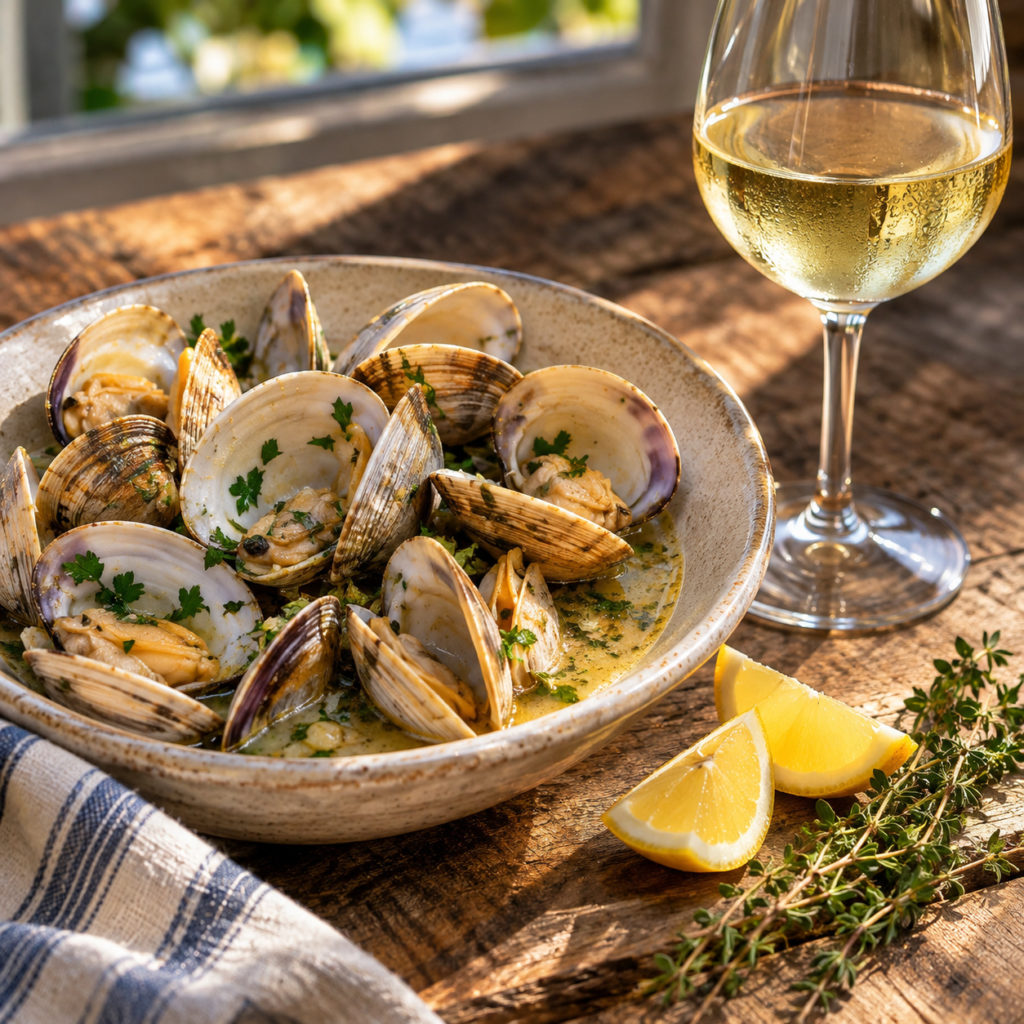 The first is the Massovivo Vermentino from Tenuta Ammiraglia, on the Tuscan coast of the Maremma. Vermentino is the definitive wine of Italy’s western, Tyrrhenian shore, grown up and down the coast of Liguria and Tuscany for exactly the food we are talking about. Pour it and you get ripe orchard fruit, peach and apricot, a lift of citrus and fruit blossom, and something wilder underneath that the Italians call macchia toscana, the scrubby coastal brush of sage and thyme that grows right down to the water. The palate is dry and broad, slightly viscous, with woody herbs steeped in citrus and a saline thread that runs clean through the finish. That salt is the whole point.
On the Ligurian coast they drink this with spaghetti alle vongole, pasta with clams, and with fritto misto, the mixed fry of small fish and shrimp. I reach for it with raw oysters and a plate of steamed clams, where that saline snap does the same job as a squeeze of lemon. Their vongole is our steamer pot. Try it and see if your palate agrees.
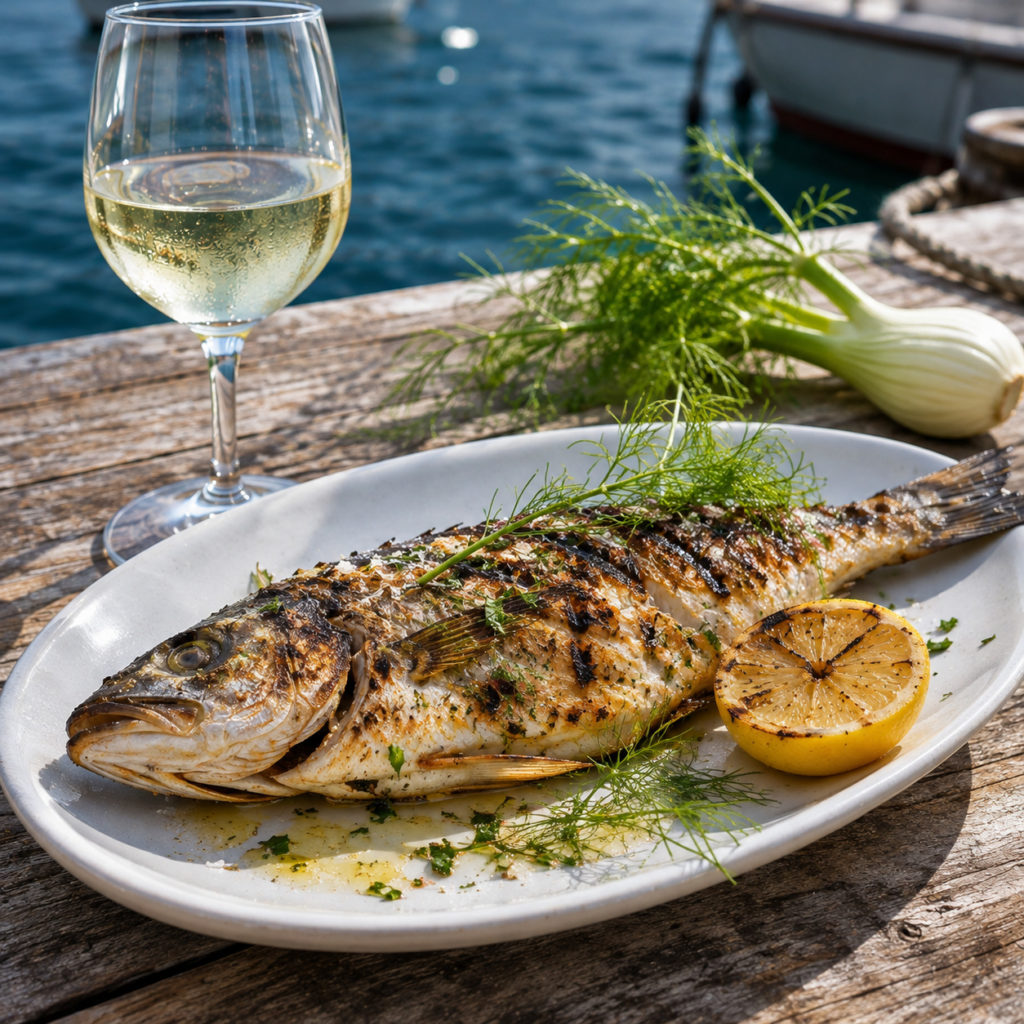 The second is the Torre Zambra Poggio Salaia Pecorino from Abruzzo, on the Adriatic side, produced organically. Pecorino is a grape that nearly disappeared, saved by a handful of growers in the hills above the sea, and it has a distinct mineral spine that the Vermentino does not. Expect peach and pear, pink grapefruit, a floral note of chamomile, and a whisper of almond. The palate leads with lemon zest and grapefruit over a stony, mineral core, a light brine, and a pleasing bitter-almond finish, with a little fennel that emerges as the wine opens.
This is the culinary coast for brodetto, the long-simmered Adriatic fish stew that every town along that shore makes a little differently, and of grilled prawns eaten steps from the boat. Their brodetto is our Lowcountry boil. I love this one with our local sea trout, simply grilled, where the wine’s mineral cut and herbal edge seem to meet the fish halfway. But your fish, your grill, your call.
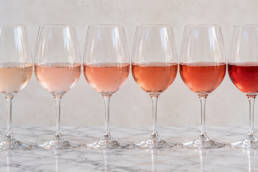
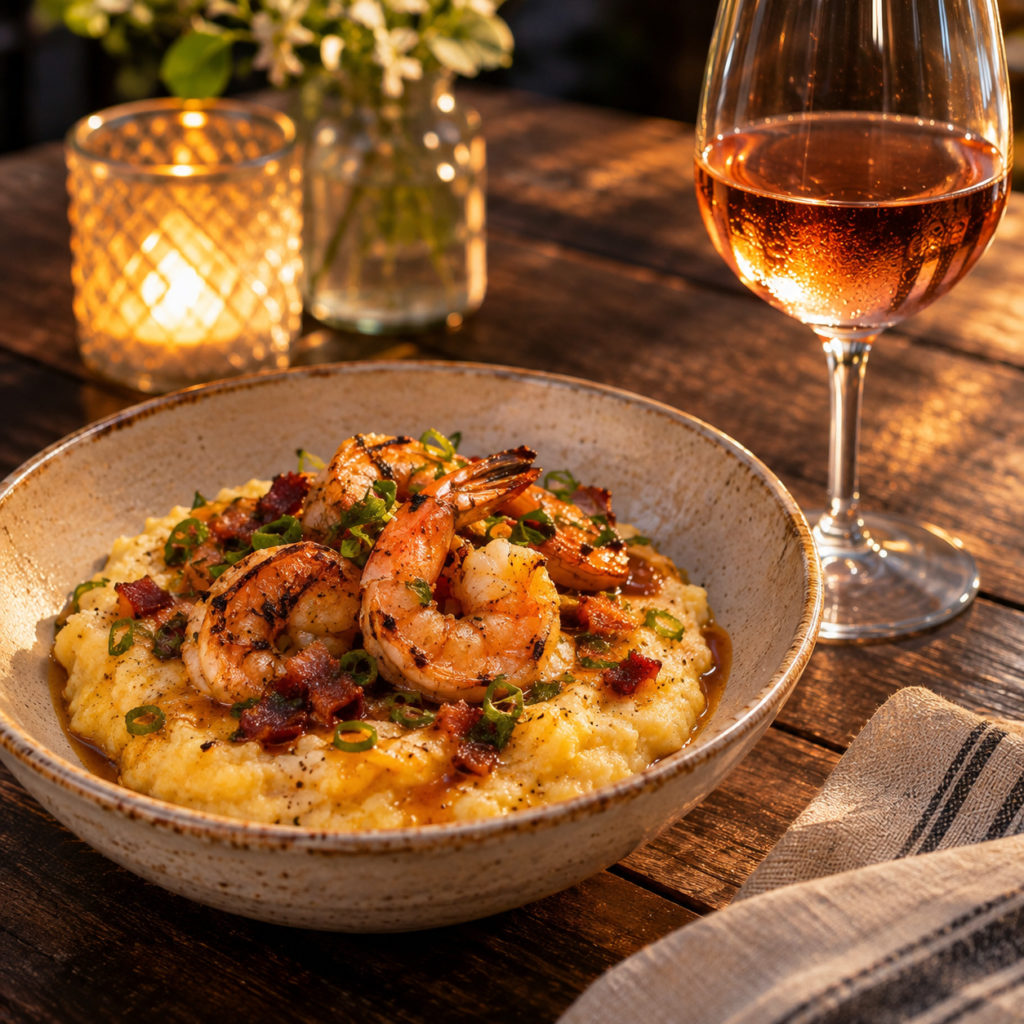 The third asks you to forget what you think you know. The Attems Pinot Grigio Ramato comes from Friuli, in Italy’s far northeast, and it is the original version of the grape America flattened. Ramato means coppery, referring to the color, because the juice rests on the grape skins the way a red wine does, which is how Pinot Grigio was made here long before it became a beach cliche. The nose is unexpected, red fruit with a savory, almost meaty note. The palate is all bright citrus, tangerine and blood orange, with a touch of cherry pith and marzipan, a sturdy and genuinely viscous mouthfeel, and a savory finish. It is a completely different animal from the Pinot Grigio you know, and a far more interesting one.
In Trieste and along the Friulian coast this is the wine for scampi alla busara, langoustines simmered in garlic, tomato, and wine, and for richer preparations that a thin white would disappear beneath. That weight is exactly why I would pour it with shrimp and grits. Where a delicate wine would vanish under the cream and the smoke, this one has the body and the savory grip to stand up and answer back.
Here is the part that matters more than any of my suggestions. I have told you what I like with these wines, and what the people who have been drinking them for generations pour on their own coast. None of it is a rule. Every one of us tastes differently, with our own thresholds and our own preferences, and that is not a flaw to be corrected. It is the entire pleasure of the thing. So buy the three bottles, cook the seafood you love best, the shrimp any way you like it, the oysters, the fish off your own dock, and pour a little of each alongside. Let your own palate tell you which wine sings with which dish. Two coasts, one table, and the only expert who matters is the one holding your glass.