Oregon Pinot Noir: Summer’s Most Seductive Red
Summer is coming, and with it comes the annual red wine dilemma. The temperature climbs, the grill fires up, the back porch beckons, and suddenly that big, extracted Cabernet sitting on your shelf feels about as welcome as a wool sweater in July. You want something in your glass. Not a commitment. Not a workout.
Here is something most people do not know about drinking red wine in summer: the bottle you pull off the shelf has probably been sitting at room temperature, which in a South Carolina summer means somewhere between warm and volcanic. Before you open it, set it in the fridge for about 15 minutes. That’s it. No thermometer required, no anxiety. Just a little patience and you will be rewarded with a wine that refreshes rather than clunking up your palate. Oregon Pinot Noir, specifically, was made for exactly this moment.
The Heartbreak Grape Finds Its Home
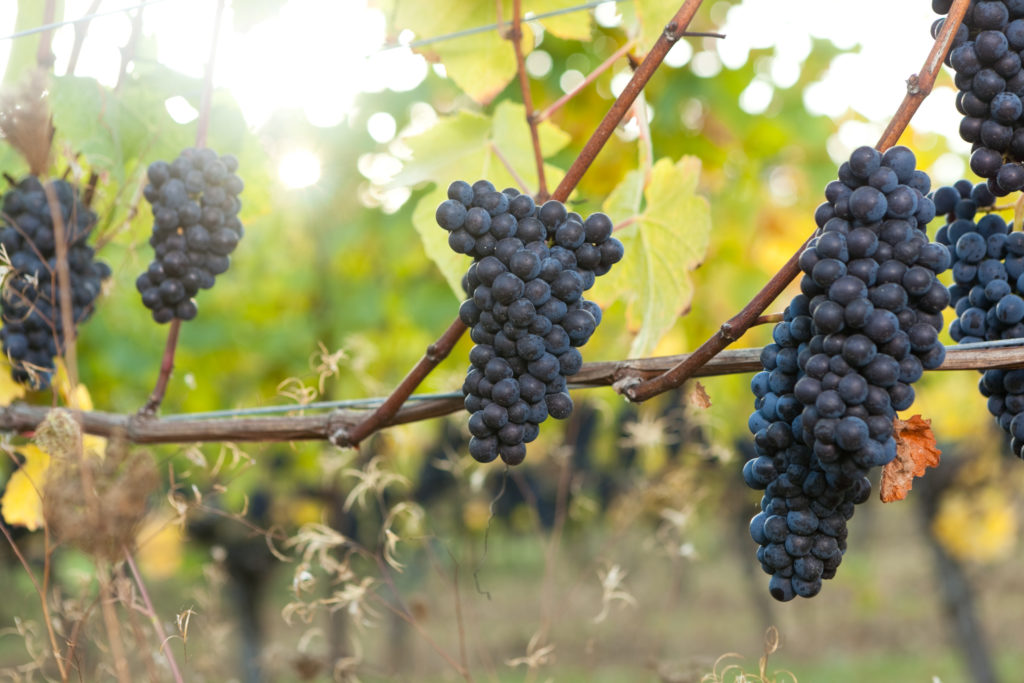
Pinot Noir has earned its nickname the hard way. Winemakers and growers around the world call it the heartbreak grape because no other major red variety is so unforgiving of the wrong conditions. Too warm a climate and the results are overripe, extracted fruit with elevated alcohol that shows more like a bruising Merlot than the elegant, quietly seductive wine Pinot Noir longs to be. If you enjoy that style, drink it with pleasure. Wine has no rules worth following more than your own palate. But if you have ever wondered whether there is another version of Pinot Noir out there, lighter on its feet, more perfumed, more alive with acidity, the kind of wine you want to keep pouring rather than finish and be done with, the answer is yes, and it lives in Oregon.
Not every wine region grows Pinot Noir and they shouldn’t. The grape will tell you when it is unhappy and the resulting wines will magnify this truth. But in Oregon’s Willamette Valley, something clicks. The valley sits at roughly the same latitude as Burgundy, France, the ancestral home of Pinot Noir, and it shows. Long, gentle growing seasons with warm days and cool nights preserve aromatic complexity and natural acidity. The dominant soil type in the Dundee Hills and surrounding sub-appellations is Jory, a volcanic red clay that drains well and stresses the vine just enough to concentrate flavor without inflating alcohol. It was here, starting in the late 1960s, that a handful of visionaries planted Pinot Noir and got laughed at for their trouble. Then a 1979 Paris tasting put Oregon Pinot Noir on the world stage alongside premier cru Burgundy and nobody laughed anymore.
Three bottles tell that story today, each born from a completely different philosophy about what Oregon Pinot Noir can and should be.
A to Z Wineworks 2023 Oregon Pinot Noir (~$20)
In 2002, four Oregon wine industry veterans sat around a kitchen table and decided to build something different. Bill and Deb Hatcher and winemakers Sam Tannahill and Cheryl Francis had worked among Oregon’s finest estates. They knew the wines. They also knew that most consumers were paying too much or drinking too little of what the state had to offer. Their mission was direct: aristocratic wines at democratic prices.
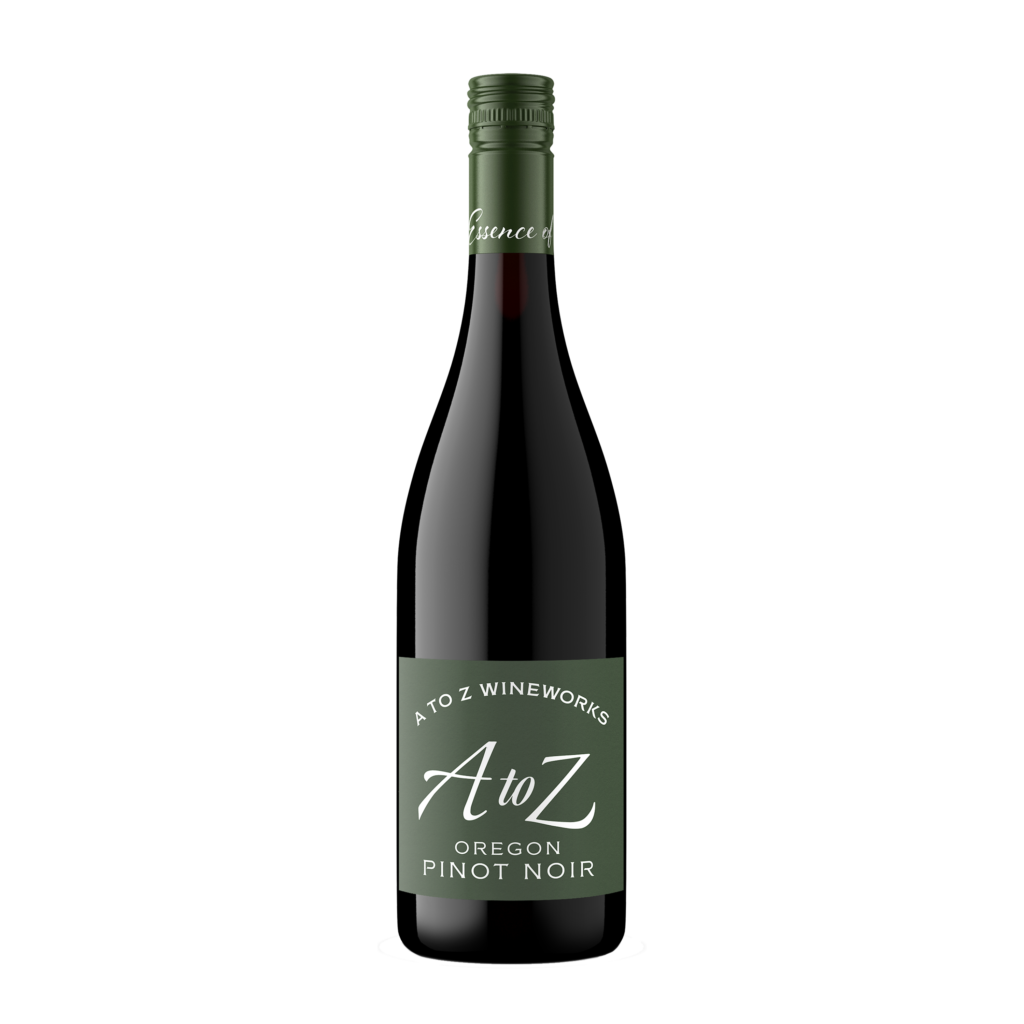 A to Z Wineworks was born from that conversation, and that philosophy still lives in every bottle. Rather than farming a single estate, A to Z works with approximately 50 contracted growers spread across Oregon’s remarkable network of valleys, from the Willamette to the Umpqua to the Rogue. That is why the label says Oregon rather than Willamette Valley. This wine is not trying to be one place. It is trying to be all of Oregon in a single glass, and it succeeds. Twice named to Wine Spectator’s Top 100, B Corp certified since 2014, and still the top-selling Oregon wine brand in the country.
The 2023 opens clear and vibrant with rich primary aromas of strawberries, cherries, blueberries, raspberries and cranberries, developing beautifully into violets, red currants, pipe tobacco, iron and wet stone. The attack is balanced between richness and brightness with hints of roses and honeysuckle, then the mid-palate reveals ripe tannins and crisp acidity with a touch of minerality and warming spice, cinnamon, anise, saffron and sandalwood, lending greater complexity. Succulent and juicy with real concentration, the finish is long and rich with that classic Oregon freshness. This is your weeknight bottle, your grilled pork tenderloin bottle, and your friend-who-thinks-they-do-not-like-red-wine bottle.
Willamette Valley Vineyards 2023 Whole Cluster Pinot Noir (~$29)
In 1983, a young Oregon native named Jim Bernau cleared an old plum orchard in the Salem Hills, dug out the blackberry vines, and planted Pinot Noir. Without drip irrigation, he hand-watered the young vines using seventeen lengths of 75-foot garden hose to get them through their first summer. That level of commitment tends to produce either great wine or great therapy bills. In Bernau’s case, it produced one of Oregon’s most beloved wineries and a genuinely unusual business model.
Unable to secure traditional financing, Bernau did something no one in American wine had done before: he obtained permission from the Securities and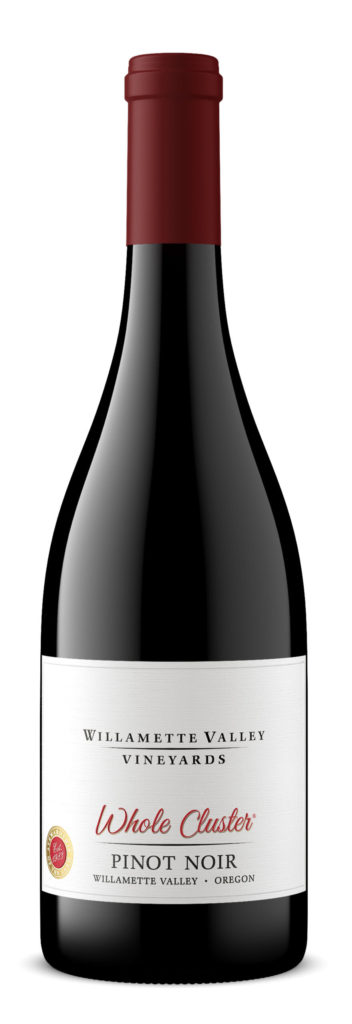 Exchange Commission to sell shares in his winery directly to Oregon wine enthusiasts. In 1989, approximately 1,200 local shareholders invested an average of $1,700 each and became owners. Today Willamette Valley Vineyards is publicly traded on NASDAQ under the symbols WVVI and WVVIP, with more than 26,000 shareholder owners. If you have ever wanted to own a winery, this is your most affordable path. Every barrel-aged Pinot Noir comes from nearly 500 acres of estate vineyards, LIVE certified and Salmon-Safe, farmed by hand.
The Whole Cluster bottling is where Jim Bernau’s curiosity got the best of him in the best possible way. He began experimenting with dropping hand-picked whole clusters, stems, berries, everything, into a chilled fermenter, pushing oxygen out with CO2 and sealing the vessel tight. What happened was essentially a gentle internal fermentation inside each individual berry before the skins ever broke. The result is a wine with extraordinary aromatic lift, brighter fruit, and a lighter, more elegant structure than traditional destemmed and crushed Pinot Noir. This partial carbonic maceration is a technique borrowed from Beaujolais and adapted to Oregon, and in this bottle it sings.
The 2023 pours ruby red with aromas of dried dark cherries, cinnamon and cranberry. But the most memorable way to describe this wine comes from the glass rather than the spec sheet. Blackberry and pain au chocolat aromas arrive like the continental breakfast of your dreams. The culinary theme continues on the palate as flavors of marionberries and caffe latte mix with a savory grilled mushroom note that keeps you coming back for another sip. The winery suggests pairing it with Sunday brunch and they are not wrong. This is also your cedar-planked salmon bottle, your summer porch bottle, and the one to serve slightly chilled on a warm evening when you need a red that behaves like it understands the season.
Rex Hill 2022 Willamette Valley Pinot Noir (~$38)
And now, the twist.
When Rex Hill’s founders retired in late 2006 after more than two decades of building one of Oregon’s most celebrated Willamette Valley estates, they passed the keys to a pair of Oregon winemaking families who shared their reverence for the land. Who were those families? The same people behind A to Z Wineworks. Bill and Deb Hatcher, Sam Tannahill, and Cheryl Francis, the kitchen table crew who built A to Z on the democratic pricing mission, turned around and acquired a historic estate winery and ran it in almost exactly the opposite direction.
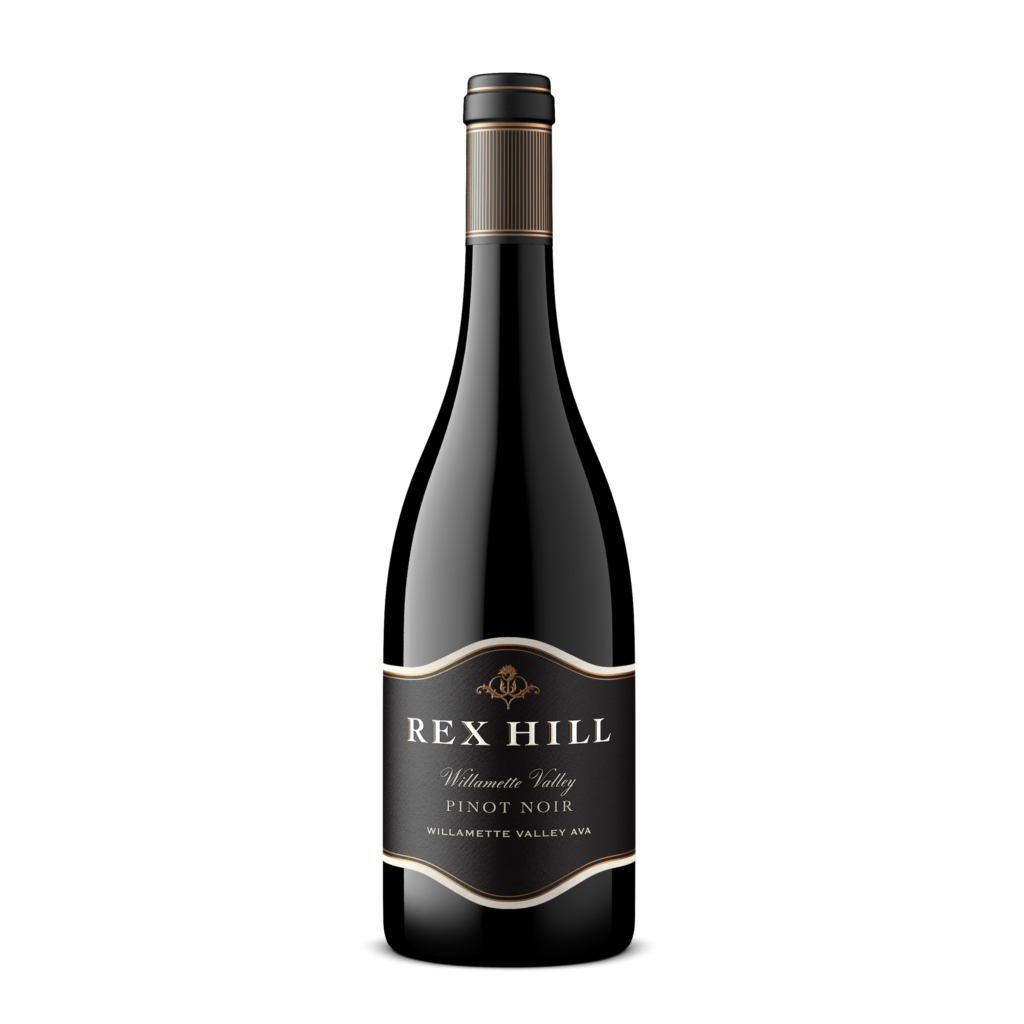 Where A to Z sources from 50 vineyards across the state, Rex Hill focuses entirely on Willamette Valley estate fruit. Where A to Z produces hundreds of thousands of cases annually, Rex Hill produces less than 3 percent of that volume, hand-picked and hand-sorted, fermented in small lots. The crown jewel is the Jacob-Hart Vineyard in the Chehalem Mountains AVA, planted on an old turkey farm and farmed today under Demeter certified biodynamic principles, the most rigorous organic farming standard in the world. The winery itself is LIVE certified and B Corp certified. Same philosophy, same families, completely different wine.
The 2022 is carmine red in the glass and announces itself with the confidence of a wine that knows exactly what it is. Red and black berries, fleshy plums and dark cherries arrive first, followed by vanilla, black tea, and baking spices including star anise and nutmeg. Secondary notes of candied tamarind, cream soda, rose petals, cocoa, caramel and marshmallow reveal themselves with time in the glass. Bing cherries and lemon drop hard candies make for an immediately inviting aromatic introduction, and then comes the tart cran-raspberry mid-palate that will genuinely make your mouth water. The oak is beautifully integrated, the tannins are round and plush, and the finish is long and textured. Give this one a 30-minute decant and a plate of duck confit or mushroom risotto and it will reward you generously.
The Point
Three bottles. Three completely different visions of what Oregon Pinot Noir can be. A democratic blend born in a kitchen. A community-owned estate built by garden hose and sheer determination. A storied biodynamic vineyard passed from one generation of believers to the next, by the very same family that started the whole democratic experiment. They share a latitude, a soil type, a grape variety, and a refusal to make Pinot Noir look like something it is not.
The heartbreak grape found its American home in the Willamette Valley. This summer, find yours.
—
A to Z Wineworks 2023 Oregon Pinot Noir, approximately $20. Willamette Valley Vineyards 2023 Whole Cluster Pinot Noir, approximately $29. Rex Hill 2022 Willamette Valley Pinot Noir, approximately $38. All widely available at Total Wine and fine wine retailers.